Commentary
An important play that gives us a lot of information.
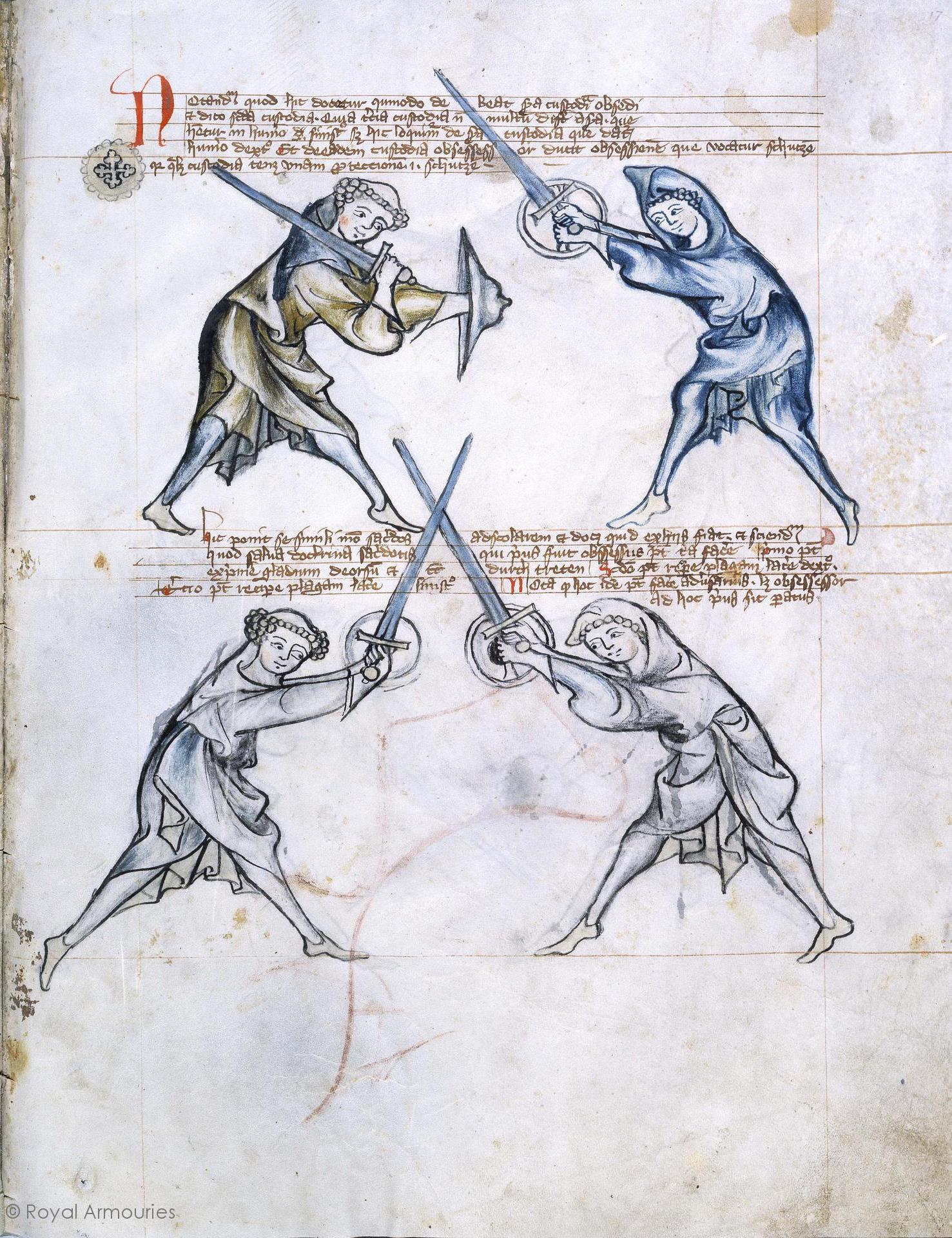
It is the first introduction to schutzen, and it is immediatelly used as a siege (instead of a defence). This is one of high schutzen that preemptively covers the cut from above, which is exactly what priest's secunda custodia is ready to do.
The priest reacts by the same schutzen, that crosses the sword of the opponent and creates a neutral bind. The priest's schutzen can be used as a position (when taking a position softly), but it can also be performed actively as a cut into the scholars blade, attempting to beat it away.
The three options (that are same for both fencers) are mentioned:
- an active durchtretten if the shutzen was not a beat
- a strike from the left, similar to duplieren of Liechtenauer, that will go to the head
- a strike from the right, that will strike in any height
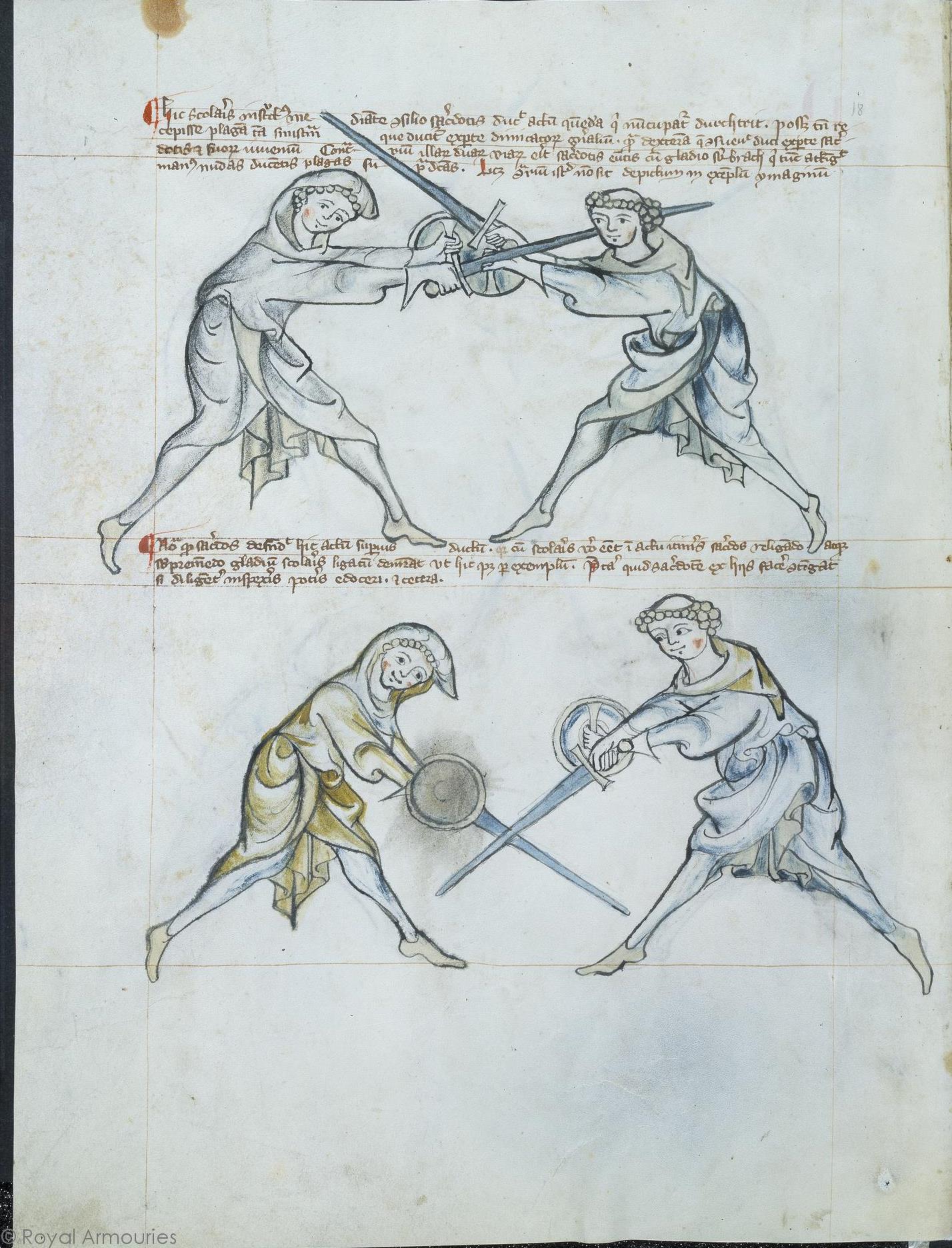
Durchtretten and defence against it
The second page shows us the scholar performing and active durchtretten. We are also shown a defence against it, that is probably based on the step back. If the priest keeps the distance, the scholar can neither trap his sword nor occupy his shield, so the priest can defend with a rebind.
The text also describes (not shows) what the defence against strikes from right or left would be. It would consist of stepping back (so that the defender keeps safe distance) and sniping the opponent's hands from below atd the same time. This reaction is similar to falling under.
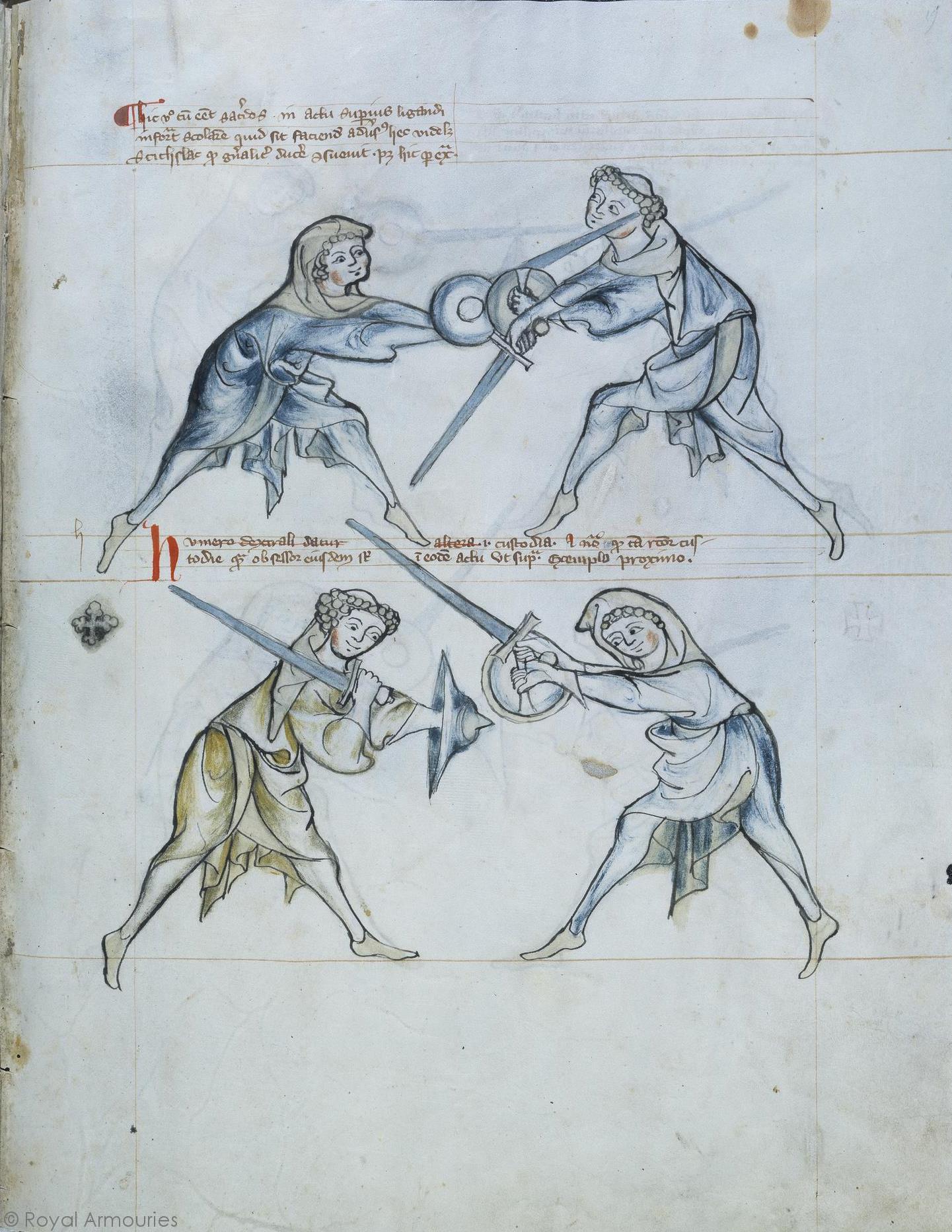
The last image is showing that if the scholar's durchtretten was defended by a rebind, he will continue with a stichslack. Which is a recommended action to do from binding below and on the right.