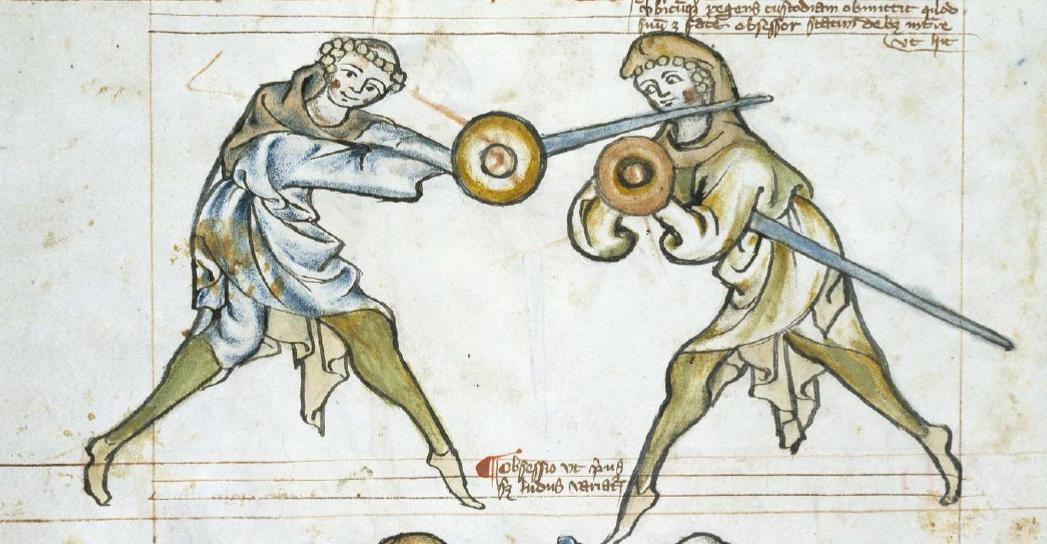
Main attacking tactics of I.33 seems to be
- Perform any siege from out of measure, in order to get into contact distance.
- Then win the fight in contact distance and "enter" with a strike.
This is of course a very broad description; there is a wide range of sieges available, that lead to different situations. And fight in contact distance, which is usually about binding, can unfold in many ways. But almost every play of I.33 follow this pattern (and concentrates mostly on fight in contact distance), so it seems to be priests most general approach to attack.
I.33's attacking pattern si simple. First perform a siege to get in the bind, then win in the bind.
The whole sequence may be very simple - if you close in with a siege, and the opponent fails to threaten you or get in the bind (for example because he is defending only with the shield), you will win by first strike in contact distance. This is covered by several plays about omitting the bind.
Even more simple situation is when you perform a cut or thrust as a siege (from out of measure) and it hits. I.33 doesn't talk about this option at all, but it may happen. This would probably be considered a first intention attack in modern terminology.
Next possibility is to wait for a siege of the opponent, and react with in-tempo counterattack to it. This is shown for example in plays of quinta custodia.
Final possibility is to use a trick. The priest does not shy away from using "irregular" tricks that are based on the fact that they will not be expected. Even though such tricks are risky if the opponent knows them and is prepared for them. An example of such trick may be the sword grab.