
Commentary
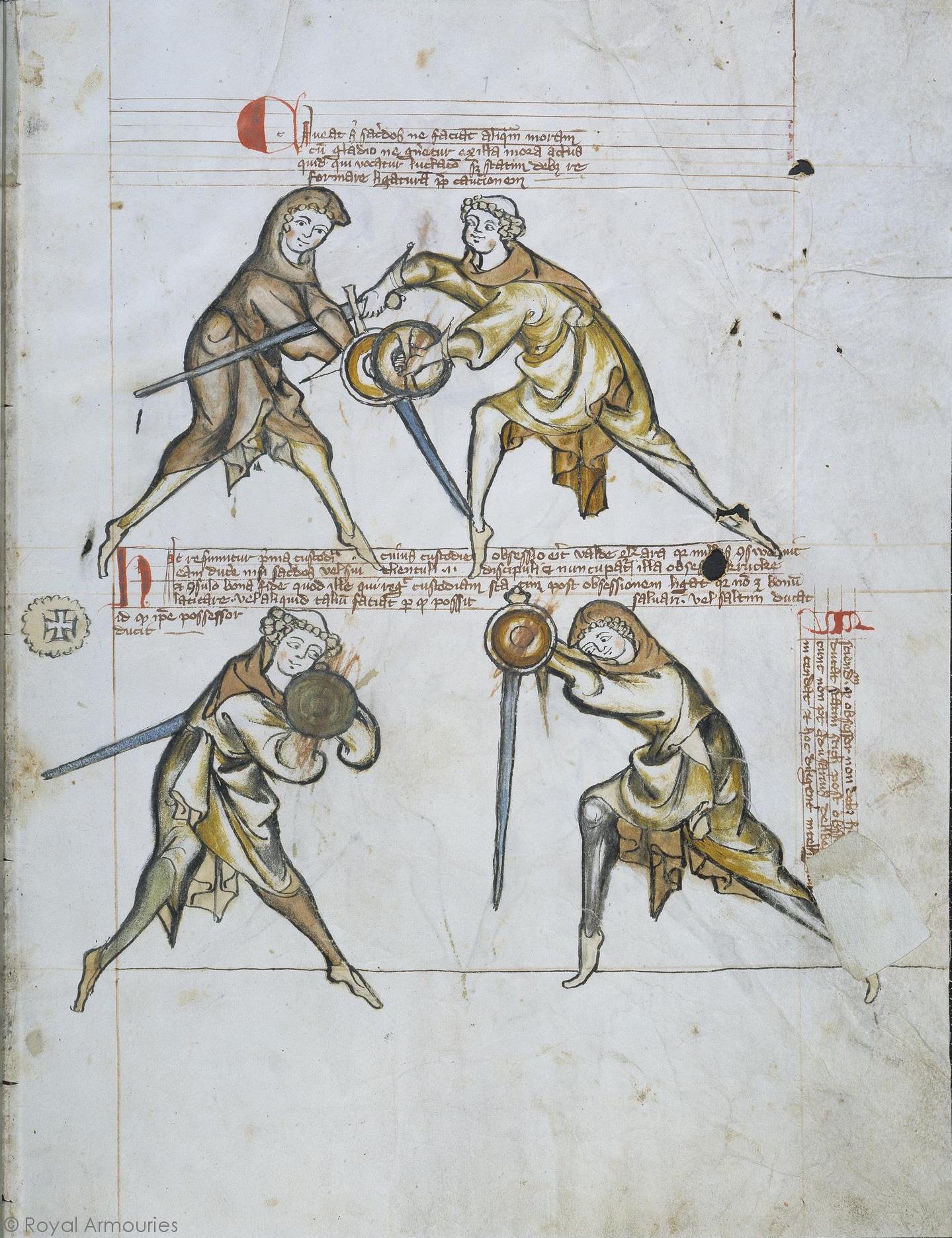
A krucke siege is introduced here. It is launched from prima custodia against an opponent in prima custodia. The action starts with an agressive push forward - because of short reach of krucke, the attacker needs to get closer then usual. Based on the reaction of the defender, the play then branches. This play shown one branch, others are explored in second krucke play and third krucke play. All three plays together describe all possibilitied of the defender, and correct folowup for each of them.
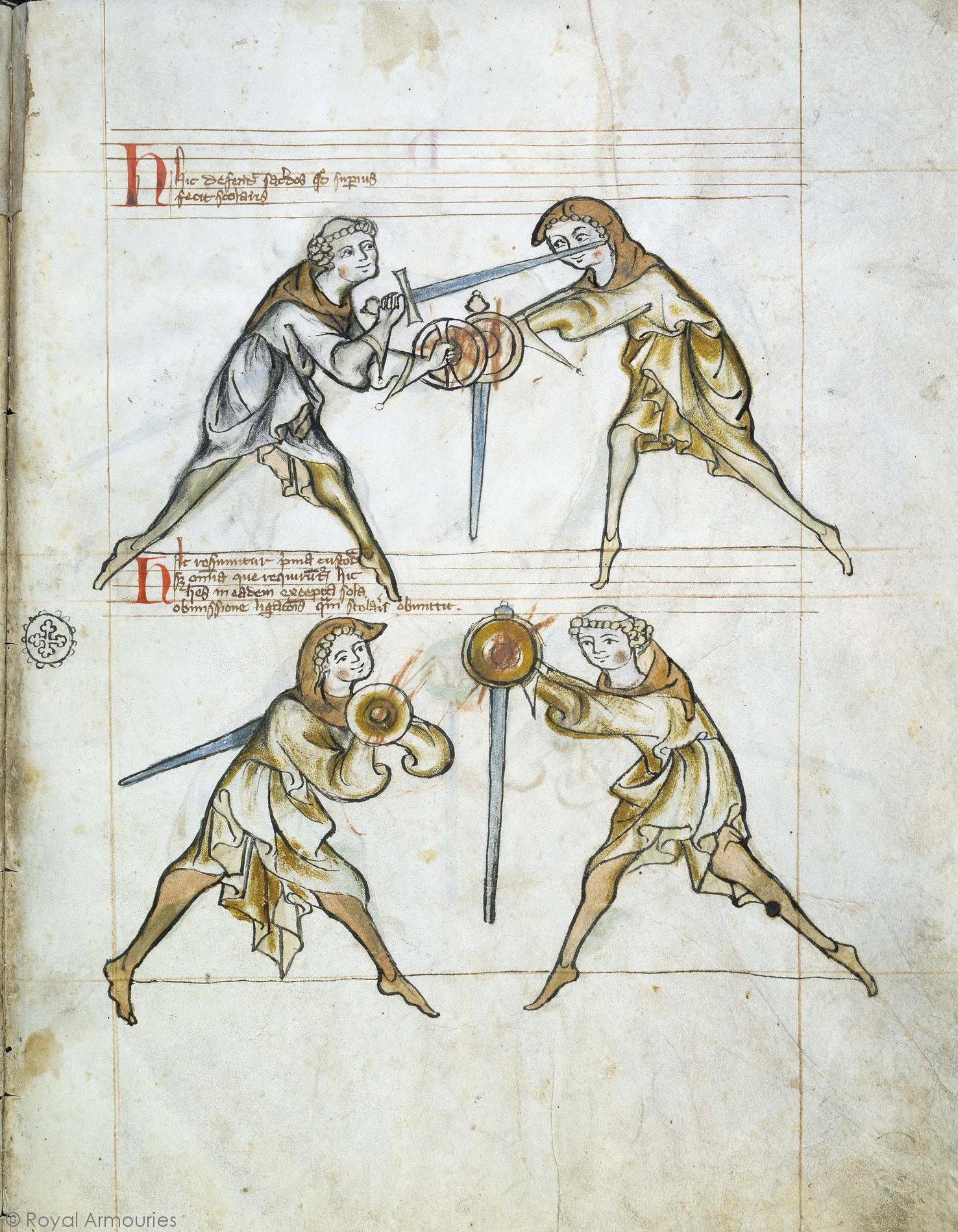
The second page underlines the best defence for the defender - he should bind, so use a sword to defend. Later play shows what will happen if the defender only uses shield. Here the defender gets into the bind by using an underarm halpschilt-like descending cut as a schutzen - so in order to parry, not to hit. The result of this parry is shown in the first image of second page.
On the second page after the defender parried, the attacker might be tempted to continue with a slicing motion of his krucke and slide above the defender's sword. I.33 here warns against it by introducing the play of binder and the bound - if the attacker slides from the bind, the defender should be able to immediatelly hit him. So instead we are getting a different solution - an arm grab.
Arm grab is a grappling technique, that you can use only form a closer distance. But the attacker already IS in a close distance - he had to be because of short reach of his krucke siege. So he may go for frontal arm grab directly, without neccessity to go through priest's special longpoint.
In the last image, the play shows us how the priest defends attacker's attempt of arms grab. He checks the attackers shield hand with a schiltslack, which prevents the attacker from wrapping his arm around the priest's arms. At the same time, the priest uses the situation for a strike to the attacker's head. It is worth noting that after his schutzen, the defender was binding above an on the right, which is a position for schiltslack. So if he reacts with an action generally recommended by I.33, he will naturally defend attacker's attempt of grappling.