Commentary
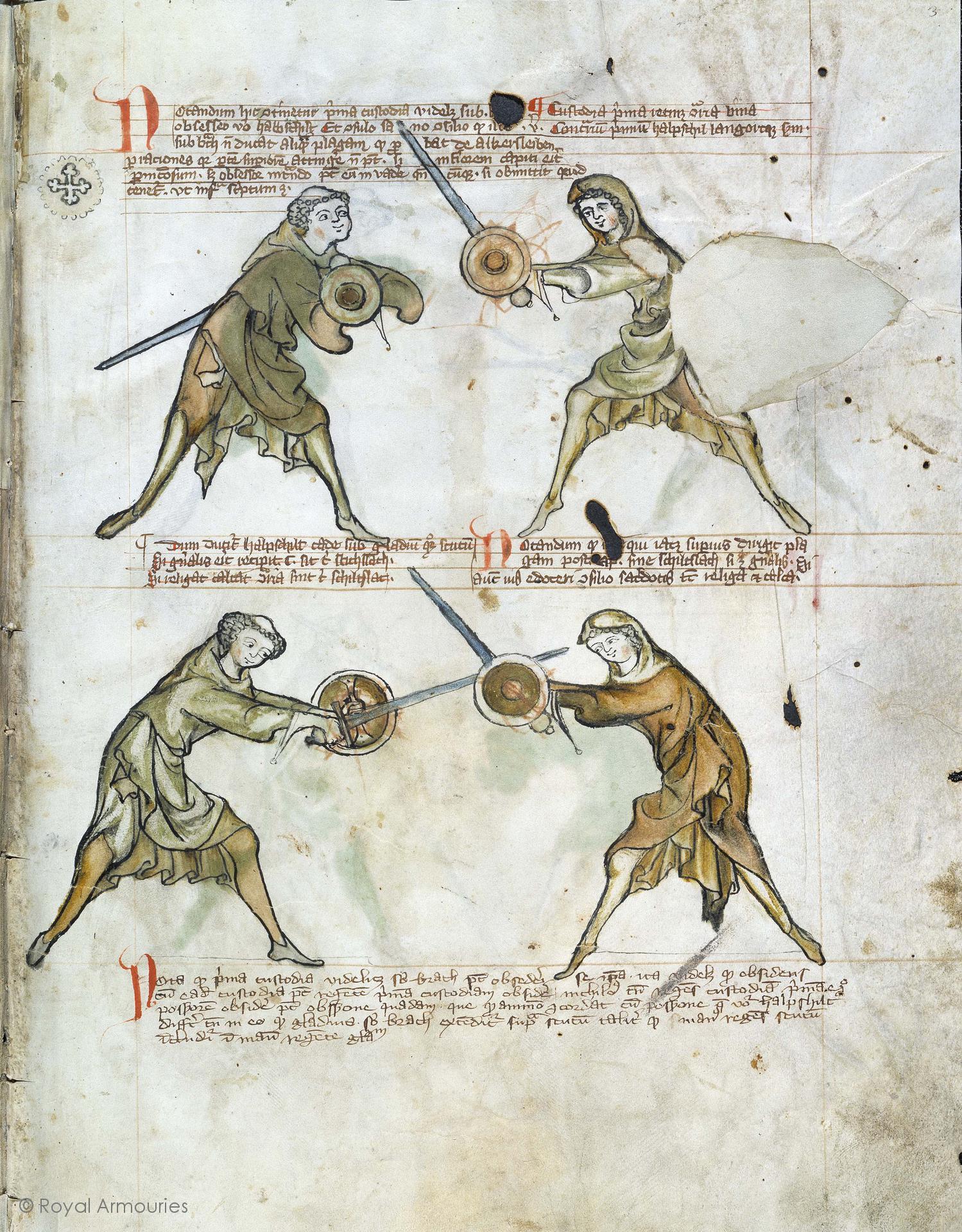
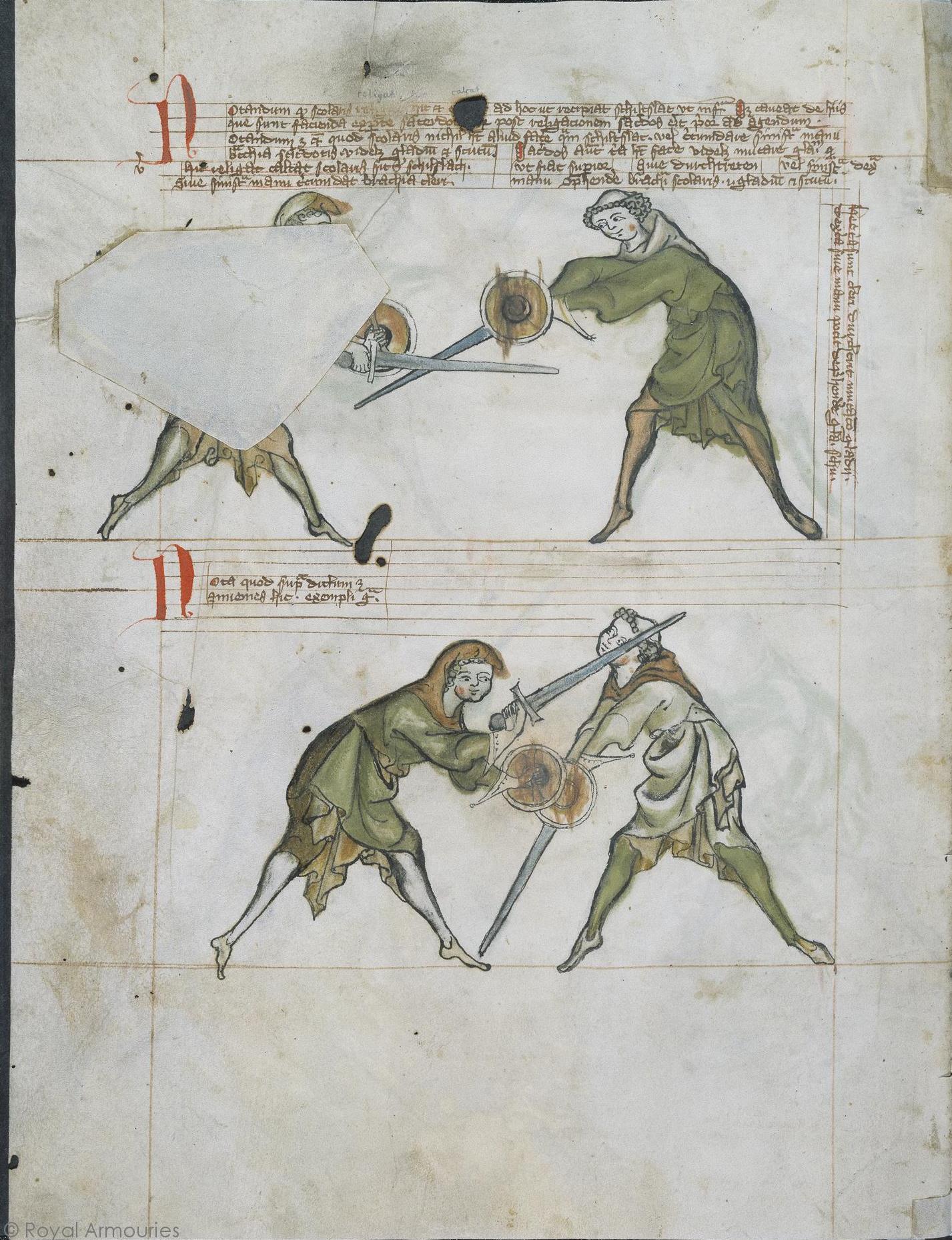
This play, appart from showing us an exchange of techniques, also provides a lot of information
Possible self-defence context - The whole play possibly starts in a self-defence situation, when the priest is just drawing his weapons. This is how I explain the phrase "custodia prima retinet contraria bina" (prima custodia has two opposistions). I believe it tells us, that a surprising attack will be performed by either a descending cut or a thrust.
The wrong reaction - defender should not react by performing in-tempo counterattack with an attempt to deliver a killing blow. The priest views this as either non-functional or too dangerous.
The correct reaction - The play tells us how to react to halpschilt siege (a downwards cut). The defender should fall under the sword and shield. If the attacker is a common fencer, he will go for direct thrust, that we will handle by stichslack (as shown in play 30 and play 31 ; notice, that these plays are NOT calling it a stichslack, even though they do refer to the same action). The correct solution for the attacker would instead be a rebind and step. During rebind, the attacker sets tip of the sword against the defender, and if he then steps, it is a direct threat of a thrust. That the defender has to handle somehow.
How to handle the rebind - Against the rebind, the defender is can perform either mutatio gladii, durchtretten or back arms grab. These options are named in the text, but not shown. The play instead follows an intuitive reaction, where the defender pushes attacker's sword away with the crossguard. This action brings both defenders hands together, and such state is then exploited by attacker's schiltslack.
Prima custodia can also be besieged by another prima custodia.
Possible mistake
The scholar is said that after his rebind (he is then binding above and on the right), he may do either schiltslack or grab the priest's hands with his left hand. But the action of grabbing the priest's hands is never shown from this position and seems impossible.
The exchange shown
First two images of the play are showing us the situation and a reaction of falling under the sword and shield. In the next two images we follow correct solutions from the scholar (attacker) - he performs a rebind (that gets him into binding above and on the right) and then schiltslack.